HA LONG BAY · LAN HA BAY, VIETNAMPERSONAL RESERVATIONS(+84) 386026886hello@greenrubycruises.com
The Green Ruby environmental impact dashboard

A lighter footprint.
A brighter horizon.

Extraordinary journeys deserve extraordinary care. Discover the technology behind our sustainability ambitions, and follow our progress as design estimates become measured results.

Prototype reporting status: no validated operating dataset is connected to this page yet.Understand our figures ↗︎
01 — The impact snapshot

Every meaningful number
begins with evidence.

A clear separation between projected benefits and actual emissions is at the heart of our reporting.

Measured CO₂ avoided○ Awaiting verification
—
tCO₂ / year

Actual carbon savings will appear here when engineering data, a documented baseline and reporting period are available.

Green Ruby 1 · Ha Long BayNot yet measured
Solar-assisted power
~25%

Previously published estimate of onboard power supplied by solar during daylight hours.

Design estimate · not verified operating data
Seawater cooling
~40%

Proposed reduction in cooling-system energy versus a conventional cooling reference.

Cooling-specific target · not ship-wide CO₂

Why not show a running CO₂ counter? An animated savings figure would imply that we have measured emissions already. Our reporting instead distinguishes design forecasts, measured emissions and reductions against a documented baseline. Historical public estimates, including an approximate 60 tCO₂/year solar figure in an older About Us version, are held for revalidation and are not reported here as achieved impact.

02 — Designed for a difference

Technology with
purpose.

Three engineering approaches to using less fuel and less energy. Each will be assessed on its own merits, without double counting carbon reductions.

01 / Sunlight

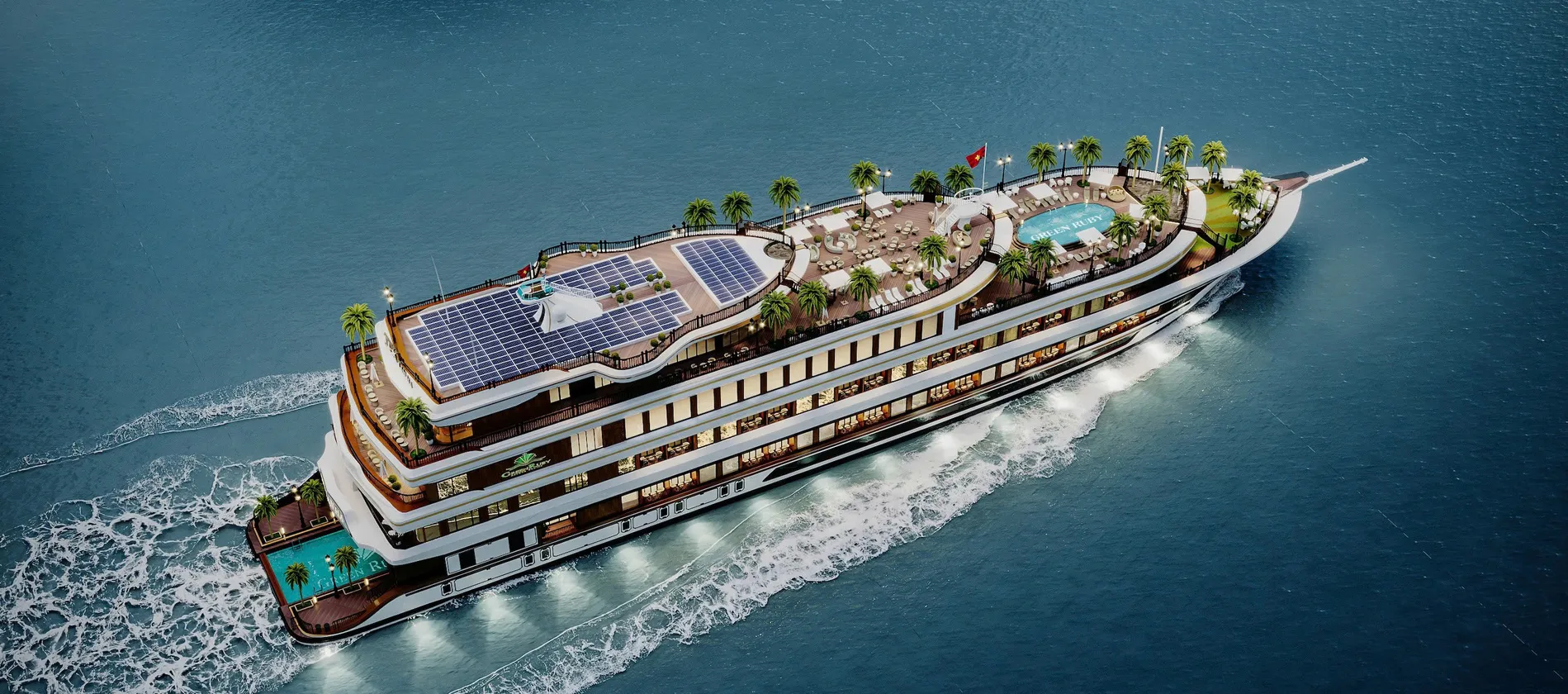
Solar-Assisted Power

Daytime rooftop generation is designed to supply onboard electrical loads and reduce generator demand. Our future reporting will show solar kWh, generator fuel and the resulting emissions estimate.

Track · kWh solar generated
02 / The sea

Seawater Cooling

Cooling efficiency is designed to improve through seawater-assisted technology. Any energy reduction must be compared with an equivalent conventional cooling system — not with the whole vessel.

Track · cooling kWh saved
03 / Circular energy

Heat Recovery & Reuse

Waste heat from propulsion and generators can support onboard hot-water and comfort systems. Savings will be measured separately and checked for overlap with other systems.

Track · recovered heat kWh
Engineering features describe intended operations, not independently assured performance.Our sustainability philosophy
03 — From intention to instruments

The numbers we
intend to publish.

When operational evidence is available, visitors will be able to compare voyages, months and vessels without confusing forecasts with actual performance.

Fuel consumption & emissionsMonthly reporting · planned
No validated series yet

Voyage fuel logs and fuel-specific emission factors will be used to calculate actual combustion emissions.

Actual measurements will replace this empty-state chart only after quality review.
04 — Beyond carbon

Protecting more
than the atmosphere.

The environmental health of the bay is about water, materials and people, too. These indicators are tracked separately from greenhouse gases.

01

Water stewardship

Biological wastewater treatment is designed to protect marine habitats. Future reporting will focus on treatment volumes and applicable quality checks.

Reporting planned
02

Less single-use plastic

Refillable bottles, bulk amenities and supplier packaging initiatives aim to reduce disposable materials across each voyage.

Measurement method to be defined
03

The communities of the bay

Local sourcing, skills development and community participation form a wider commitment to responsible tourism.

Programme in development
05 — Our reporting principles

Open about
the numbers.

A beautiful dashboard is only useful when every figure can be understood, challenged and improved.

We intend to document the measurement period, reporting boundary, reference scenario and calculation method behind every climate-related figure before describing it as an achieved reduction.

Actual emissions vs. avoided emissions

Actual direct fuel-combustion emissions are calculated from recorded fuel use and a fuel-specific emissions factor. Avoided emissions are a separate estimate against a justified baseline. They should never be subtracted from the vessel's gross emissions inventory or described as carbon removal.

How the baseline will be established

We will compare like-for-like energy services over a defined period: equivalent route, weather and vessel load where relevant. Solar generation, cooling and recovered heat must not count the same saved fuel more than once. Assumptions and exclusions should be disclosed.

What gets checked before publication

Operational meters and fuel logs should be reviewed for completeness; the emission factor must match the actual fuel. Vessel occupancy, voyage distance and timeframes will be kept with the measurements. Verified status will only be used when the level and provider of verification are explicitly documented.

Targets, forecasts and certifications

Projected technologies and potential savings are planning estimates. Actual outcomes are published only when monitored. Green Globe is currently listed as in progress; it should not be presented as an earned certification.

Methodology note · prototype
Reference framework: GHG Protocol principles for separately reporting avoided emissions. This page is a proposed reporting design, not a third-party assurance statement or real-time emissions feed.
The future of thoughtful travel

Discover the bay.
Help care for it.

Explore Green Ruby's voyages and the evolving commitments behind a more considered way to travel.

Explore our journeys