Best Time to Visit Halong Bay: Weather Month by Month
Late October to November is one of the most comfortable times to visit Halong Bay, with cooler temperatures and less rainfall than in summer. This guide looks at the weather month by month, including sea conditions, seasonal fog and what to expect during typhoon season.

Explore this story
The best time to visit Halong Bay depends on what you want to do. Late October through November generally offers a good balance of comfortable temperatures and relatively dry weather. December tends to be drier but cooler and cloudier, while late March and April are worth considering for spring travel. May to September brings warmer water for swimming, along with heavier rainfall and a greater risk of storms.
In brief, Ha Long Bay has two broad seasons. From November to April it is cooler and drier, with average highs of about 20–27 °C and grey, drizzly spells in February and March. From May to October it is hot and wet, with highs of about 29–32 °C and most of the year’s rain, peaking in August. Lan Ha Bay shares the same seasons, as our comparison of the two bays explains.
For today’s conditions, see the live forecast for both bays, updated every 30 minutes. For choosing dates, the month-by-month table of long-term averages is the better guide.
No single month offers perfect weather in Halong Bay. The most suitable time depends on whether you prefer swimming, sightseeing, photography or simply relaxing on a cruise. Understanding the seasonal differences will help you choose dates that suit your plans.
What is the best time to visit Halong Bay?
Different seasons suit different kinds of trips.
Clear views and comfortable temperatures: Late October to November generally offers less rain, lower humidity and daytime highs in the mid-to-high 20s °C.
The least rain: December is typically the driest month, although temperatures are cooler and cloudy days are still common.
Warm water for swimming and kayaking: May to September has the warmest sea temperatures, but also the heaviest rainfall and greater storm risk.
Spring sightseeing: Late March to April brings gradually warmer weather, although mist and drizzle can still occur, particularly earlier in the season.
The greatest chance of misty views: February and March often have cloudy skies, drizzle and reduced visibility.
If your travel dates are flexible, November is a good starting point. Summer cruises can also be enjoyable, especially if swimming is a priority, but it is sensible to allow some flexibility in case bad weather affects your itinerary.
How does the weather change month by month?
The table below shows typical conditions at Bãi Cháy, on the Ha Long waterfront. The figures are rounded long-term averages rather than forecasts for specific travel dates.
Month | Average high | Monthly rainfall | Days with rain | Sunshine (hours per month) | What to expect |
|---|---|---|---|---|---|
January | 20°C | 28 mm | 8 | 81 | Cool and often cloudy, drizzle, cold spells possible |
February | 20°C | 25 mm | 10 | 48 | Damp and hazy, very little sun |
March | 23°C | 43 mm | 14 | 43 | Haziest month, frequent drizzle, sea still cool |
April | 27°C | 86 mm | 11 | 89 | Warming up, haze lifting, good until mid-month |
May | 31°C | 183 mm | 12 | 178 | Hot, rainy season begins, swimming weather |
June | 32°C | 297 mm | 16 | 168 | Hot and humid, heavy showers |
July | 32°C | 364 mm | 17 | 187 | Hot and wet, thunderstorms and storm risk |
August | 32°C | 431 mm | 19 | 165 | Wettest month of the year |
September | 31°C | 276 mm | 14 | 177 | Still wet, storm risk continues |
October | 29°C | 143 mm | 9 | 177 | Warm, rain easing, plenty of sun |
November | 25°C | 39 mm | 6 | 156 | Dry, clear, comfortable |
December | 22°C | 18 mm | 5 | 128 | Driest month, cool evenings, cold snaps possible |
Rainfall, rainy days and sunshine figures are based on the Bãi Cháy climate table on Wikipedia, while average high temperatures are drawn from Weather2Travel's long-term climate data. These sources use different datasets and observation periods, so the figures should be treated as approximate indicators of seasonal patterns rather than a single standardized climate record.
The figures suggest annual rainfall of approximately 1,900 mm, with most falling between May and October. Actual conditions vary from year to year, particularly during the storm season.
What is Halong Bay weather like in October?
October marks the transition from the wetter summer months to the cooler, drier part of the year.
Average rainfall is around 140 mm, spread over approximately nine days, compared with 14 rainy days in September. Daytime highs are typically around 29°C, and humidity begins to decrease, making outdoor activities more comfortable.
The sea also retains much of its summer warmth, so swimming and kayaking can still be enjoyable when conditions are suitable.
However, October is not entirely free from heavy rain or tropical storms. If your plans involve several outdoor activities, it is worth keeping an eye on the weather forecast, especially earlier in the month.
November generally offers cooler temperatures and less rainfall than October. Average rainfall falls to around 40 mm over six days, with daytime highs near 25°C. Evenings on deck can feel noticeably cooler, so bringing a light jacket is advisable.
October to April is also a popular period for overnight cruises. For busy travel dates, booking two to three months in advance is worth considering, particularly if you want a specific cabin category or suite.
Is Halong Bay in winter worth it?
Yes, particularly if you are more interested in sightseeing, visiting caves and relaxing on board than spending time in the water.
From December to February, temperatures are generally cooler and the sky is often cloudy. January and February can bring extended periods of drizzle and mist. During occasional cold spells, nighttime temperatures may fall to around 7–8°C, with daytime highs near 15°C.
Of the winter months, December generally has the least rainfall. Based on the climate averages above, it receives around 18 mm of rain over five days and more sunshine than January or February.
January remains relatively dry in terms of total rainfall, but cloudy skies and light drizzle become more common.
Swimming is less appealing during winter because both air and sea temperatures are cooler. However, cave visits, cooking demonstrations and time spent enjoying the scenery from the ship remain worthwhile.
If you are travelling in winter, pack a warm layer for early mornings and evenings on deck. The breeze over the water can make it feel colder than the temperature suggests.
When is Halong Bay fog most likely?
February and March are among the months most associated with mist, drizzle and cloudy conditions in Halong Bay.
Although total rainfall is relatively low, the climate records show limited sunshine and frequent rainy days. Mist and low cloud can reduce visibility, particularly in the morning, when the limestone islands may appear as silhouettes in the distance.
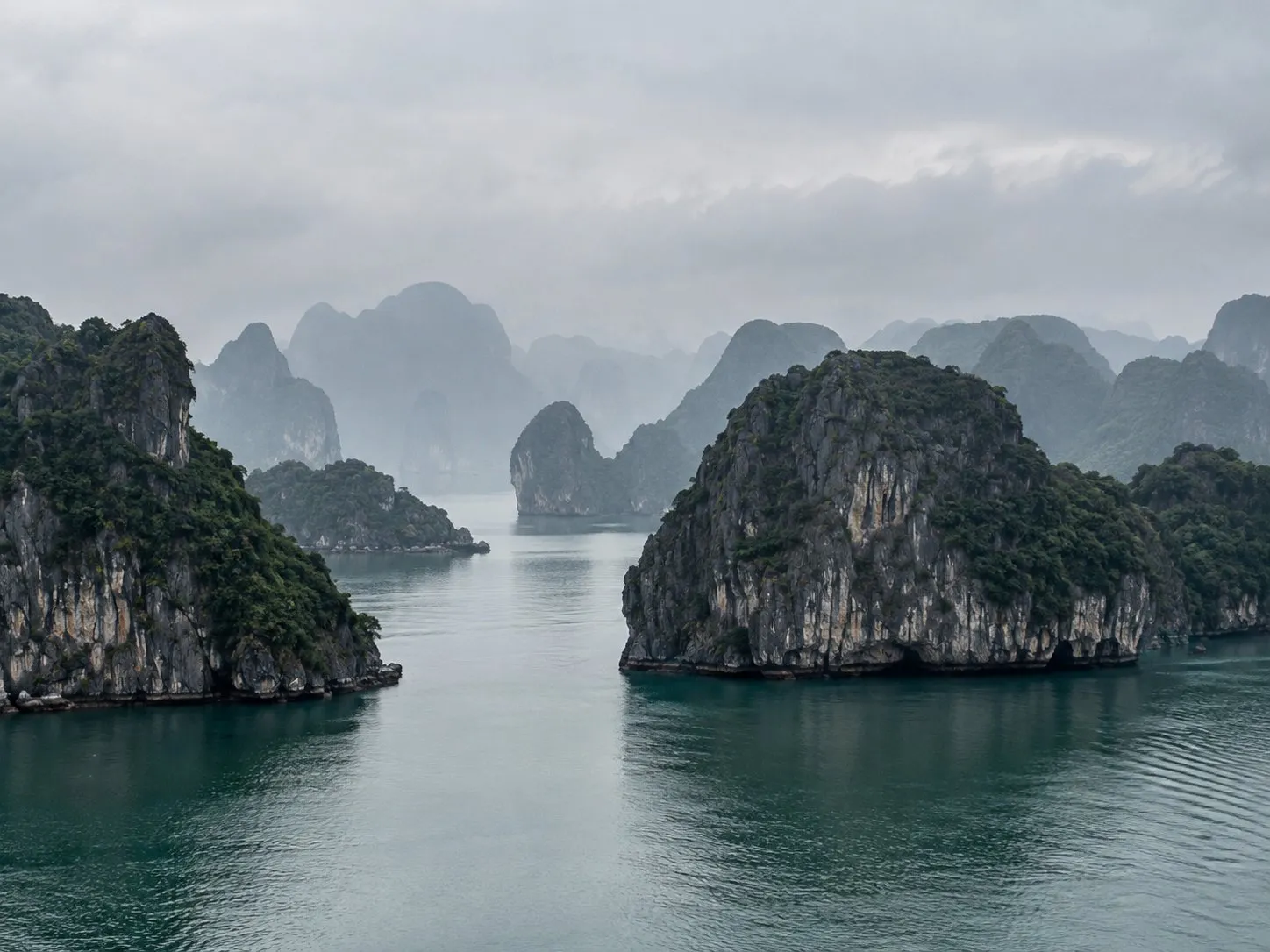
For some visitors, this is part of the appeal. The layers of limestone islands disappearing into the mist create a different atmosphere from the familiar photographs of Halong Bay under a clear blue sky.
If panoramic views and landscape photography are your priorities, however, you may prefer a time of year with a greater likelihood of clearer conditions.
Weather generally begins to warm during March and April. Sunshine also increases compared with February, although improvement is gradual and grey mornings remain possible.
Late March and April can therefore be suitable for sightseeing, but visitors should not expect consistently clear skies.
What about summer rain and typhoon season?
Summer is the warmest and wettest time of year in Halong Bay.
From May to September, average monthly rainfall exceeds 150 mm, with August typically recording the highest total at around 430 mm. Daytime temperatures commonly reach 31–32°C, accompanied by high humidity.
Despite the rainfall, summer is not necessarily cloudy all day. Sunny periods often alternate with heavy showers and thunderstorms.
Sea temperatures are also at their warmest, making this a popular season for swimming, kayaking and other water activities when conditions permit.
The main consideration is the risk of tropical storms and typhoons. Northern Vietnam can experience severe weather during the warmer months, with conditions and storm activity varying from year to year.
When authorities issue restrictions because of dangerous weather, tourist boats may be required to remain in port, return to safe anchorage or change their itineraries. These decisions are made for passenger and crew safety. Ahead of Typhoon Wipha on 20 July 2025, for example, Quang Ninh’s inland waterway port authority stopped issuing departure permits to Ha Long Bay tourist boats (Tuoi Tre News).
If you are planning a summer cruise, consider leaving a spare day between your cruise and an international flight or another important commitment. Travel insurance is also worth considering, provided the policy covers the types of disruption you are concerned about.
Under Green Ruby's stated weather policy, guests affected by sailing restrictions may be offered a refund, an alternative departure date or a replacement service, depending on the circumstances and applicable booking terms.
When is the bay busiest?
Visitor numbers vary throughout the year, with different peak periods for domestic and international travellers.
The cooler months from October to April are popular with international visitors, while summer attracts many Vietnamese families travelling during school holidays.
Public holidays and weekends can also be especially busy. Dates worth considering include Tết (Lunar New Year), the 30 April–1 May holiday period and Vietnam's National Day on 2 September.
At popular attractions, the time of day can make a noticeable difference to the visitor experience. Sung Sot Cave, for example, is one of Halong Bay's best-known attractions and can become crowded when several cruise groups arrive at once.
When comparing cruises, look beyond the list of attractions and check when each visit is scheduled. Entrance fees, opening arrangements and temporary restrictions should also be confirmed before travelling.
Which cabin and activities suit each season?
Green Ruby Cruises is preparing to introduce two vessels: Green Ruby 1, planned for Ha Long Bay, and Green Ruby 2, planned for Lan Ha Bay.
Both ships begin operations in February 2027. The Green Ruby brand facts page provides information about the fleet and its current development status.
The following examples are based on Green Ruby's planned itineraries and onboard facilities, which may be adjusted before operations begin.
Warm months: May to October
During the warmer months, an itinerary with opportunities for swimming and kayaking can be especially appealing.
The planned Ha Long Bay 2 days 1 night itinerary includes kayaking or a bamboo boat excursion at Luon Cave in the afternoon, followed by a visit to Ti Top Island, where guests can swim or climb to the viewpoint.
The current programme schedules these activities for approximately 15:30 and 16:30, subject to operating conditions.
Evening activities are expected to include options such as squid fishing. For summer travel, a comfortable cabin and access to outdoor spaces can also make a difference, particularly during the hottest part of the day.
Cool and misty months: December to April
During the cooler months, cave visits, sightseeing and indoor activities can be more appealing than swimming.
Green Ruby's planned Ha Long Bay itinerary includes an early visit to Sung Sot Cave, while onboard activities are expected to include cooking demonstrations and morning Tai Chi.
For visitors who enjoy relaxing in their cabin after a day of sightseeing, a bathtub may be a welcome feature.
The planned Serenity Deluxe and Ocean Breeze Premium cabins, both measuring 38 m², include a bathtub and separate shower. The Royal Romance Suite on Green Ruby 1, measuring 80 m², is designed with a Jacuzzi bathtub and private terrace.
Clearer-weather months: late October to November
Late October and November are well suited to visitors who want to spend more time exploring the bay in relatively comfortable weather.
If your schedule allows, a two-night cruise provides an additional day for sightseeing and activities.
The planned Halong Immersion, 3 days 2 nights itinerary includes a day-boat excursion to Cua Van floating village, Tien Ong Cave and a pearl farm. These destinations are not part of the shorter two-day programme.
An additional night can also be useful during periods of changing visibility, giving you another morning to enjoy the scenery if the weather is cloudy on the first day.
For more information about the differences between cruise lengths and destinations, see our itinerary FAQ.
What should you pack for each season?
December to February: A warm jacket or jumper for cool mornings and evenings on deck, along with long trousers. Bring an additional warm layer if a cold spell is forecast.
March and April: Light layers, a waterproof jacket for drizzle and comfortable clothing suited to changing temperatures.
May to November: Lightweight clothing, swimwear, a hat, sunglasses, sunscreen and a compact rain jacket. A light jacket is useful for November evenings.
All year: Your passport or other required identification, shoes with good grip for cave visits and island steps, personal medication and suitable motion-sickness remedies if needed.
Although many cruise routes pass through waters sheltered by limestone islands, the sea can still become rough in poor weather. Follow the crew's safety instructions throughout your trip.
Frequently asked questions
What is the worst month to visit Ha Long Bay?
There is no single worst month, as it depends on your plans. August is typically the wettest month, making it less predictable for outdoor activities. February and March can be challenging for visitors hoping for consistently clear views because of mist and drizzle.
All three months can still be enjoyable, provided your expectations and travel arrangements account for the weather.
Is one night enough in winter?
A one-night cruise can be enough to enjoy the main sights, especially if you have limited time in Vietnam.
However, a two-night itinerary gives you an additional day to explore and another opportunity to enjoy the scenery if visibility is poor on the first day. Depending on the itinerary, you may also visit places such as Tien Ong Cave that are not included on shorter cruises.
Can I book Green Ruby for early 2027?
Green Ruby 1 and Green Ruby 2 begin sailing in February 2027.
Our reservations team can provide information about planned itineraries, cabin options and booking enquiries. Availability and confirmed departure dates will depend on the vessels' operational readiness.
The best time to visit Halong Bay ultimately depends on the experiences you value most. Autumn generally offers comfortable conditions for sightseeing, summer brings warmer water for swimming, and winter has its own appeal for travellers who enjoy cooler weather and quieter moments on the bay.
Whichever season you choose, checking the forecast and understanding your cruise operator's weather policy will help you plan with greater confidence.
If you are considering a future voyage with Green Ruby Cruises, contact our reservations team to learn more about planned itineraries, cabin options and expected departure dates.