Regional attraction
There is no guaranteed daily beach-access window at Ba Trai Dao. Check the tide, your boat’s route and the current local rules before you travel.
Where is Ba Trai Dao Beach?
Ba Trai Dao lies among the limestone islands of Lan Ha Bay, in the Cat Ba Archipelago, Hai Phong. According to Hai Phong Newspaper, it is about 22 km south-east of Cat Ba town, and the boat trip from Cat Ba takes about an hour and a half.
There is no road. Visitors arrive on a sightseeing boat from the Cat Ba area or on a cruise that includes this part of Lan Ha Bay.
Ba Trai Dao is often described as one island or one beach, but the name also covers a wider area of limestone islets and small natural beaches. That matters when you plan a visit: a boat may pass through the area without stopping at a particular stretch of sand.
The Cat Ba Archipelago is part of the Ha Long Bay – Cat Ba Archipelago World Heritage property, which UNESCO extended in 2023.
Why is it called Three Peaches?
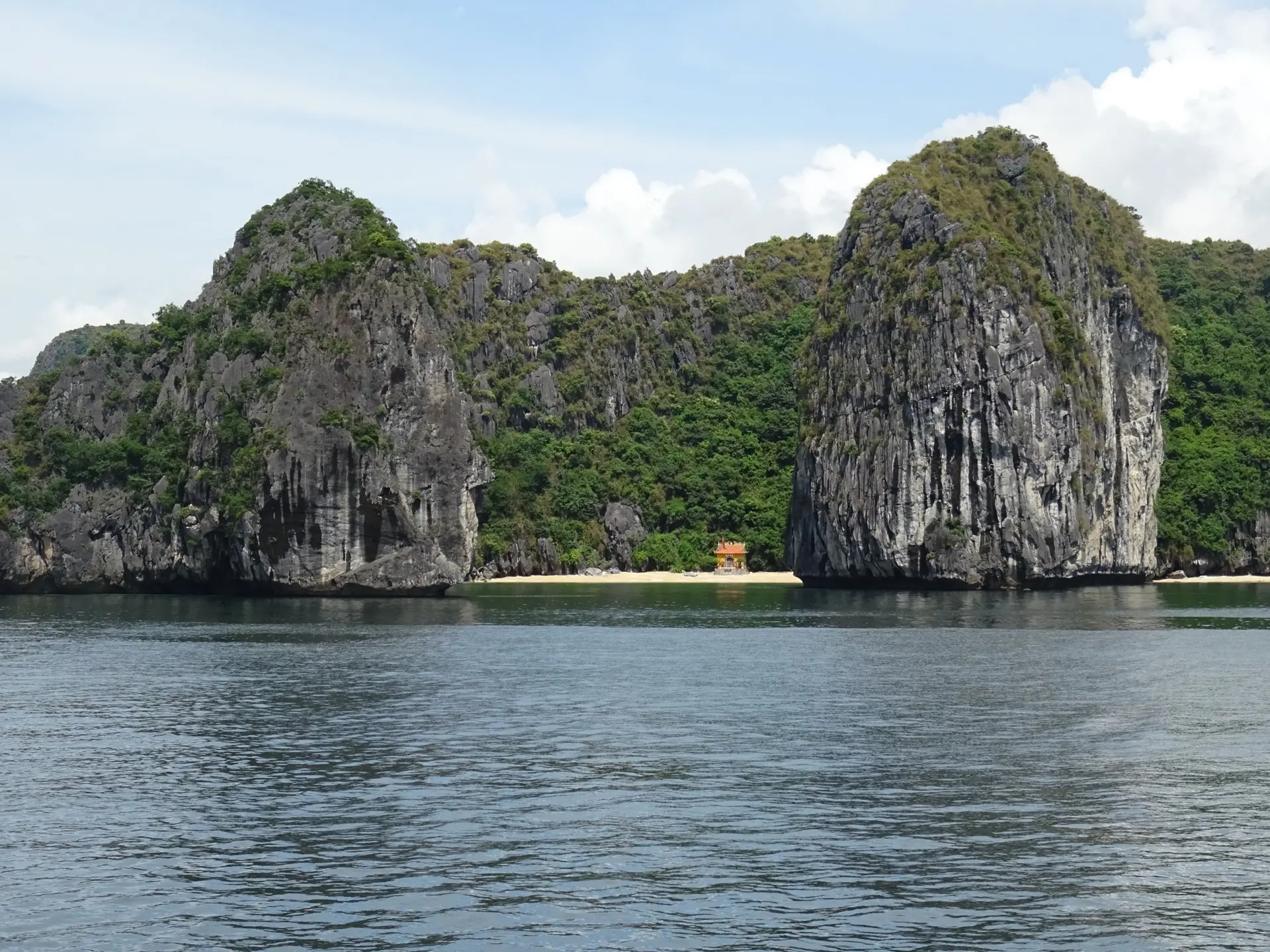
The name comes from three limestone peaks that stand close together and, seen from the water, look like peaches. Each rises roughly 20–30 metres above the sea, though their shape changes with the angle you see them from.
The legend of the three peaches
Local folklore tells of a fairy who came down from heaven and fell in love with a fisherman. Hoping they could stay together, she brought him three magical peaches. In one telling, her father discovered the romance and the couple were parted; the three peaches fell into the sea and became the islets you see today.
The versions differ, but they share three peaches, a forbidden love and the unusual rocks that gave the place its name. It is a traditional tale, not a historical account.
What makes Ba Trai Dao special?
The three rounded peaks make an easily recognised landmark. Around them are small sandy areas, rock faces and stretches of sheltered water.
Unlike the beaches near Cat Ba town, these shores cannot be reached by road, and there are no shops, changing rooms or beach services. Access depends on boats, the tide and the rules for visitor activities.
The beaches can change a lot in a few hours. At lower tide more sand shows; as the water rises, the beach shrinks or disappears under the surface. Even when landing is not possible, the islets are worth seeing from the water.
How does the tide affect a visit?
The tide is the most important thing to check. Some of the beaches here are tidal: they are exposed when the sea level falls and covered again as it rises. A photo of a broad sandy beach does not mean the same beach will be there when you arrive.
- The amount of exposed sand changes with the tide.
- Tide times vary from day to day.
- Beach access may be limited even in clear weather.
- A boat may still pass the islets when landing is not possible.
- Landing and swimming also depend on local rules and the crew’s assessment of conditions.
Do not rely on claims that the beach is open for a fixed number of hours a day. Ask your boat operator whether the planned visit matches a suitable tide and whether landing is currently allowed.
Things to do at Ba Trai Dao
Enjoy the view from the boat
You do not need to go ashore to appreciate Ba Trai Dao. From the water you see the three peaks rise above the surrounding islands, and as the boat moves they seem to change shape and overlap. A slow passage near the islets, where permitted, also shows the smaller beaches and inlets. Morning and late-afternoon light suit photography.
Visit the beach when permitted
At a suitable tide, parts of the shore may be reachable by boat, depending on the day’s rules, sea conditions and the operator’s permitted route. If a landing is included, follow the guide’s instructions and be ready to leave when asked: the tide does not wait.
Swimming
Ba Trai Dao is often listed as a swimming spot, but swimming is not always available. It depends on local permissions, the tide, currents, the weather and the operator’s safety arrangements. Depths and currents around limestone islands change, so do not go in just because the sea looks calm. If swimming is confirmed, stay in the marked area, wear a life jacket when required and follow the crew.
Kayaking
Older Lan Ha Bay itineraries often included kayaking around Ba Trai Dao. Kayak services in the Cat Ba bays have since been suspended under local rules, so do not assume they are available. Book kayaking only if your operator confirms it is currently authorised at that location. Older articles and photos may not reflect the current rules.
How do you get to Ba Trai Dao?
Only by boat. There is no daily public boat straight to the beach.
From Cat Ba Island
Most visitors join a Lan Ha Bay boat tour from the Cat Ba area, including boats from Beo wharf and other authorised piers. The trip takes around 1.5 hours, depending on the boat, the route, the weather and other stops. Not every Lan Ha Bay day tour goes there, so check the published route before booking.
From Ha Long or Tuan Chau
Some cruises from the Ha Long side explore Lan Ha Bay, but a cruise that visits Lan Ha Bay does not automatically include Ba Trai Dao. If this place matters to you, ask whether the boat will pass the islets, stop nearby or offer an authorised beach visit. For the road trip to the pier, see how to get from Hanoi to Halong Bay.
How long should you allow?
There is no standard visit length. A sightseeing programme may pass through fairly quickly, while an itinerary with an authorised beach stop allows more time. Rather than rely on an advertised duration, ask what kind of visit is included:
- a scenic passage past the Three Peaches islets;
- a stop nearby for photos;
- landing on a beach, if permitted;
- swimming or other activities, if authorised.
These are different experiences and should not be treated as interchangeable.
When is the best time to visit?
Two things count: the season, and the tide on the day.
From about May to September the weather is usually warm and the sea calmer, which suits beach visits and swimming when they are allowed. Summer also brings heavy rain and tropical storms, and the authorities can suspend sailings when severe weather is forecast. In the cooler months the scenery is still enjoyable, but the water is less inviting.
For beach access, the right time depends on the tide, not simply on morning or afternoon. A suitable tide can fall at different times on different days, so ask your operator to check it before confirming the visit. For month-by-month conditions, see the best time to visit Halong Bay.
Practical tips
- Check the tide: a planned visit does not guarantee that the beach will be exposed.
- Confirm access: ask whether landing and swimming are currently permitted.
- Bring sun protection: there may be little shade on the sand.
- Wear suitable footwear: sand, shells and wet rocks can be slippery or sharp.
- Carry drinking water: there are no shops or restaurants on the islets.
- Protect your belongings with a waterproof pouch on small boats.
- Follow the crew: currents, boat movements and the rising tide can create hazards.
- Check accessibility: getting onto a beach from a small boat can be difficult for guests with limited mobility. Travellers with young children should ask about the stop before booking.
Ba Trai Dao and Green Ruby Cruises
Ba Trai Dao is not a planned stop on Green Ruby 2’s published itineraries.
Green Ruby 2 is being prepared for overnight cruises in Lan Ha Bay, with planned visits to places such as the Dark & Bright Cave area, Ao Ech and Viet Hai Village, depending on the programme. If Ba Trai Dao is a priority, consider a separate authorised sightseeing tour from Cat Ba and confirm beach access with that operator.
Nearby places
Ao Ech Lagoon (Frog Pond)
Sheltered water among limestone islands in Lan Ha Bay, known for its setting and views from the deck rather than for beaches.
Dark & Bright Cave
A water-level passage through the limestone into an enclosed lagoon. How you go through depends on the arrangements permitted on the day.
Viet Hai Village
A village in a valley on Cat Ba Island, visited on foot, by bicycle or by electric buggy, for a look at the island’s rural life.
These places offer different experiences and are not necessarily on the same route as Ba Trai Dao.
Questions visitors ask
Where is Ba Trai Dao Beach?
In Lan Ha Bay, in the Cat Ba Archipelago, Hai Phong, about 22 km south-east of Cat Ba town. It is reached by boat and known for three limestone islets and nearby sandy beaches.
Why is it called Three Peaches Beach?
After three limestone peaks that look like peaches. A local legend also tells of a fairy who brought three magical peaches to the fisherman she loved.
Is Ba Trai Dao Beach accessible at high tide?
Not always. Some of the sandy areas are partly or completely covered as the tide rises, so beach access varies and should be confirmed before you go.
Can you swim at Ba Trai Dao?
Only when local rules allow it and the operator confirms that conditions are safe. Do not assume swimming is included in every tour.
Can you kayak at Ba Trai Dao?
Kayaking in the Cat Ba bays is subject to local restrictions. Check with an authorised operator rather than relying on older travel articles.
How do you get to Ba Trai Dao from Cat Ba?
Join a boat tour that specifically lists Ba Trai Dao. Boats leave from authorised piers such as Beo wharf; the trip takes about 1.5 hours, depending on the boat and route.
Is Ba Trai Dao suitable for families with children?
Families can enjoy the views from the boat. Beach landings and swimming need more thought because of tides, currents and getting on and off the boat; ask the operator about age limits and safety rules.
Is Ba Trai Dao included in Green Ruby cruises?
No. Ba Trai Dao is not a planned Green Ruby stop. See the Green Ruby 2 itineraries for the confirmed Lan Ha Bay stops.
Sources
- Hai Phong Newspaper (13 Sep 2025): Pristine charm of Ba Trai Dao islet
- Vietnam Airlines: Ba Trai Dao Beach travel guide
- Người Quan Sát (21 Nov 2024): Why Cat Ba suspended kayaking in its bays (Vietnamese)
- UNESCO World Heritage Centre: Ha Long Bay – Cat Ba Archipelago
- Photo: Lan Ha Bay 25, Christophe95 (Wikimedia Commons)
Photo: Christophe95, CC BY-SA 4.0, via Wikimedia Commons
Information checked: