Regional attraction
Opening hours, routes and ticket prices are set by the Ha Long Bay Management Board and can change. Confirm the latest information before you travel.
Where is Dau Go Cave?
Dau Go Cave is on Dau Go Island, in the western part of Ha Long Bay. The Ha Long Bay Management Board puts it about 3 km from Tuan Chau and about 6 km from Bai Chay, and about 300 metres east of Thien Cung Cave on the same island.
The two caves are on the bay’s sightseeing Route 1 and are usually visited on the same trip. From the boat landing, about 90 steep stone steps lead up to the entrance.
What makes Dau Go Cave worth visiting?
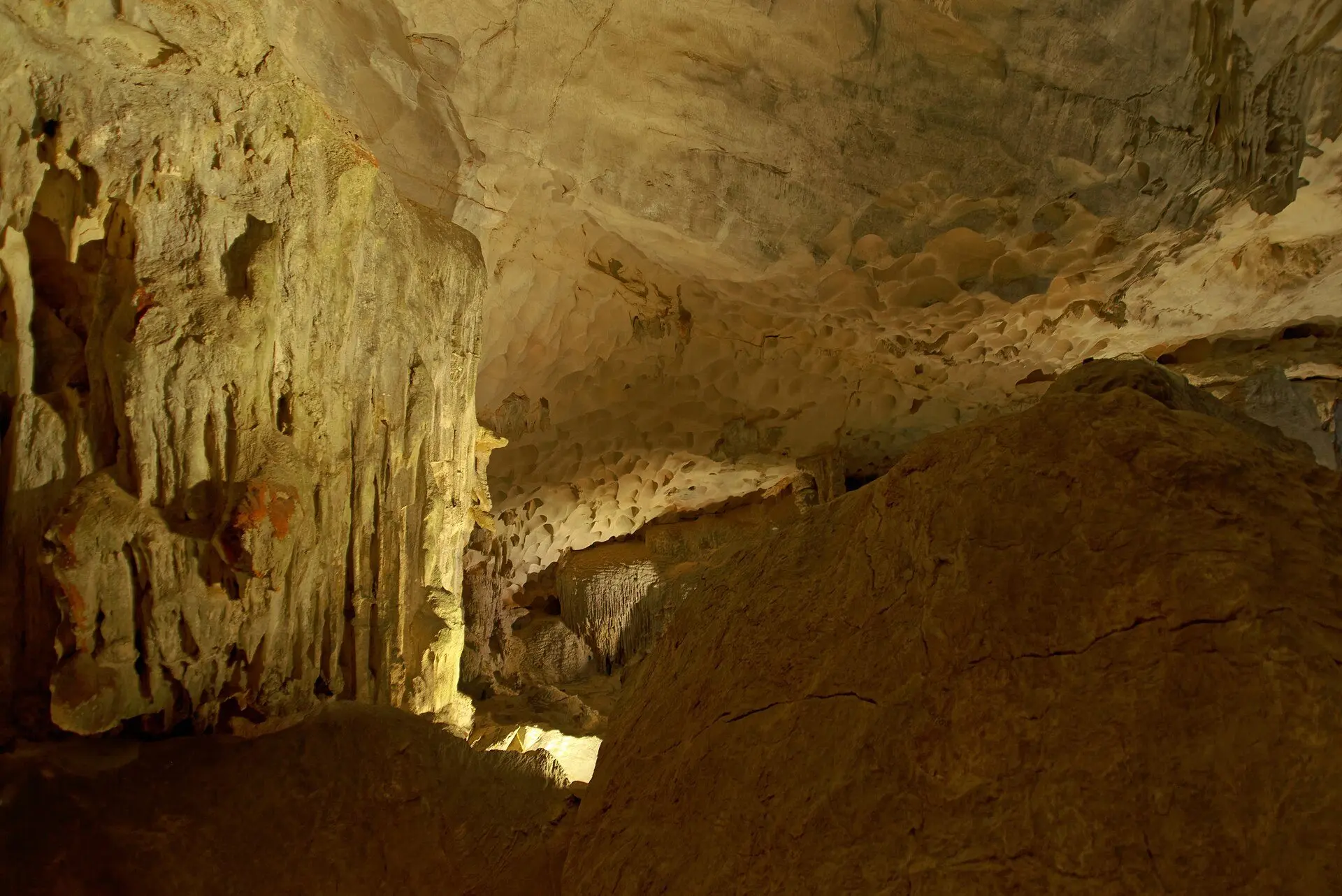
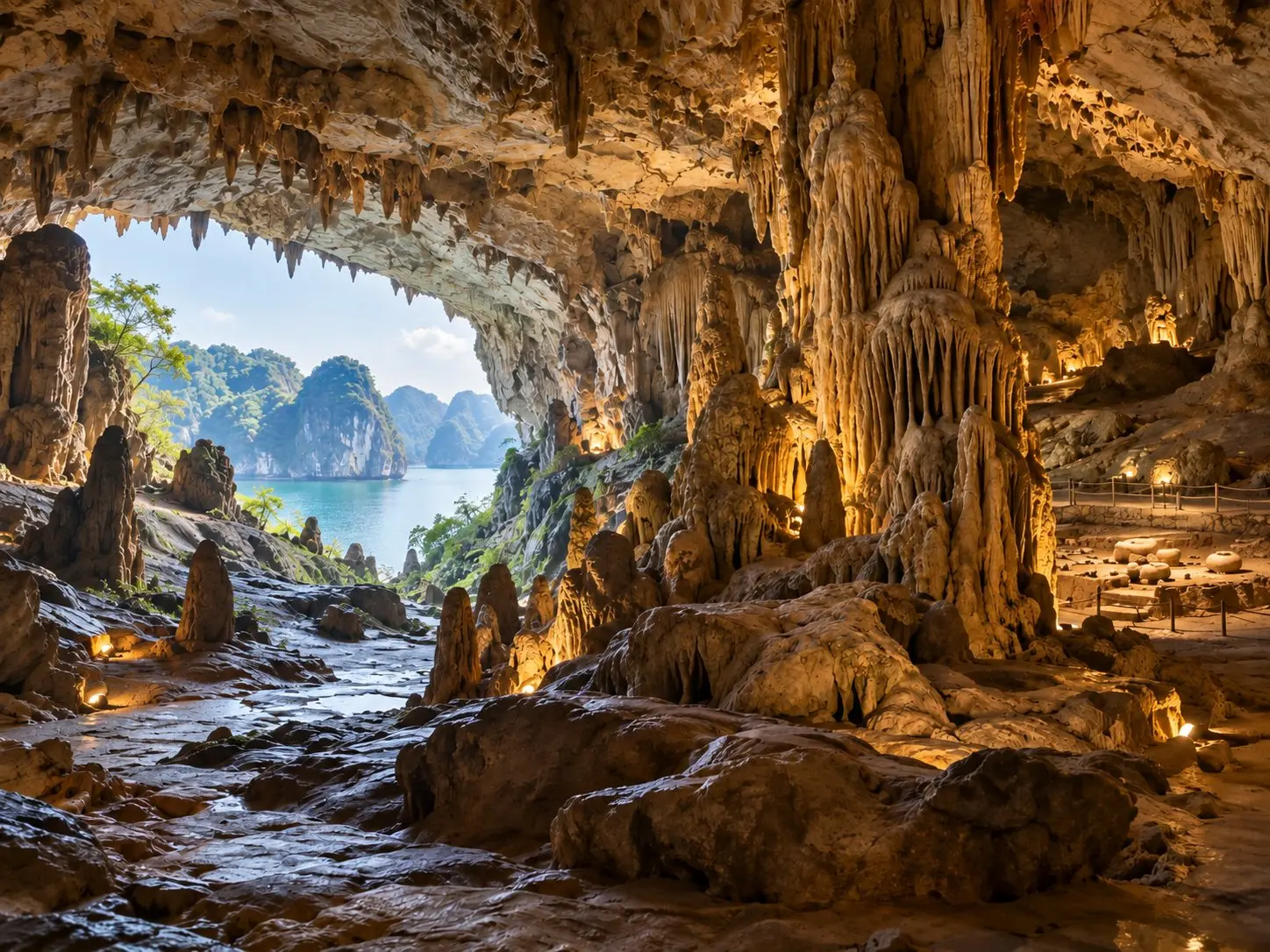
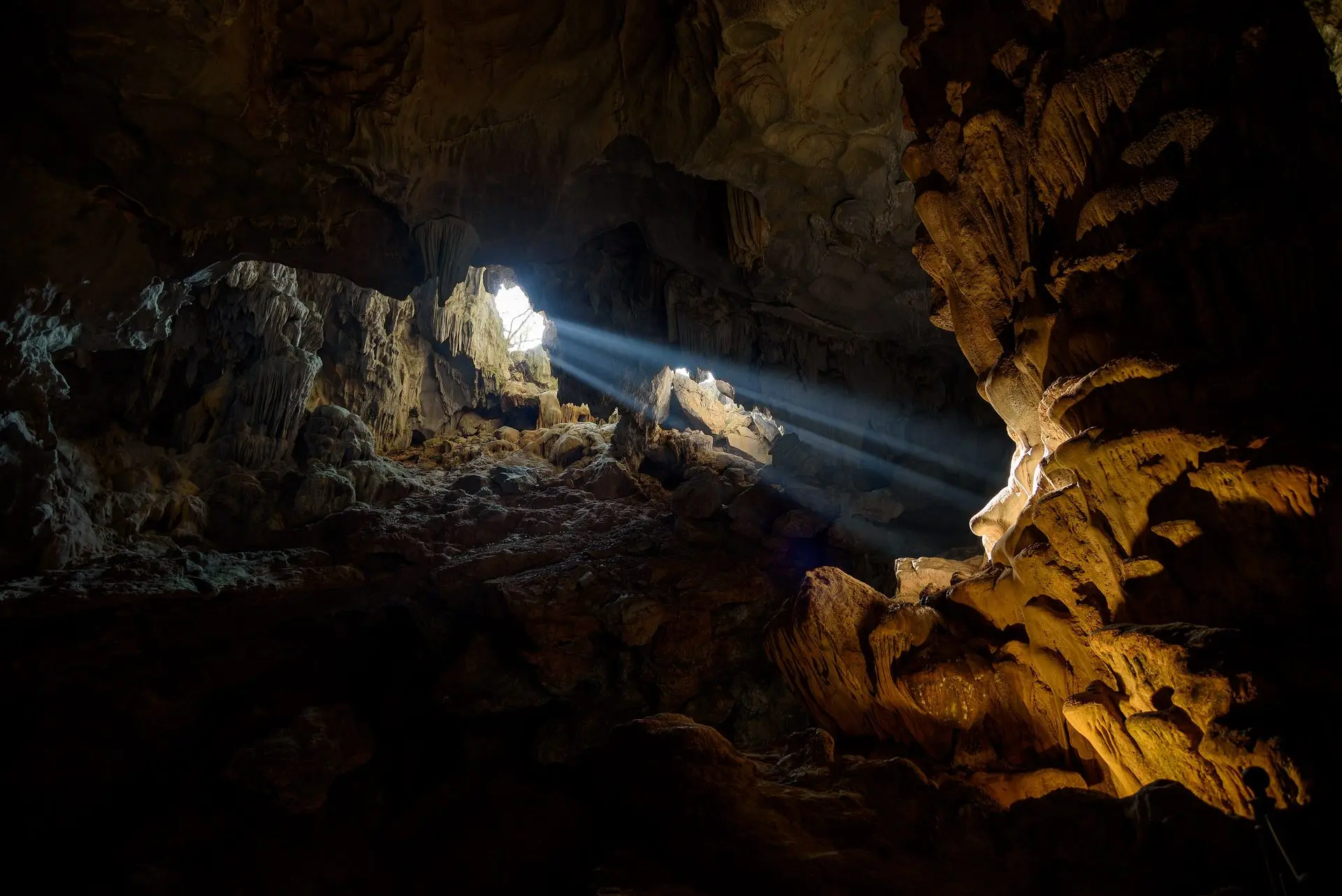
Size and light. The cave covers more than 5,000 square metres, and its entrance, roughly 17 metres wide and 12 metres high, lets daylight reach well inside. That makes the first chamber feel quite different from caves lit only by lamps. Deeper in, the daylight fades and artificial lighting takes over.
The visit passes through three chambers, each with its own character.
First chamber: daylight and weathered stone
The largest and brightest of the three. Light from the entrance falls on stalactites and stalagmites weathered by air and moisture, which gives them the aged, mossy look the Management Board describes as rêu phong, cổ kính. Some plants grow where the daylight reaches.
Second chamber: white columns
Here the formations change: large stone columns and whiter stalactites that see little sun. European visitors compared the shapes to Angkor Wat, Angkor Thom and the Leaning Tower of Pisa, and French publications called the cave the Grotte des Merveilles, the Cave of Wonders.
Third chamber: quiet and narrow
The smallest and stillest part of the cave. Shallow pools lie on the floor, and guides point out formations said to look like a banyan tree beside a village wharf, a familiar image of the northern Vietnamese countryside.
Why is it called Dau Go Cave?
Đầu Gỗ literally means “head of wood”, and in English the cave is often called the Wooden Stakes Cave. There are several explanations for the name.
The best known links it to General Tran Hung Dao, who defeated the Mongol Yuan fleet at the Battle of Bach Dang in 1288 by planting sharpened wooden stakes in the riverbed and luring the enemy ships onto them as the tide fell. According to local legend, the stakes were hidden in this cave beforehand, and the Management Board notes that “Đầu Gỗ” may be a corruption of “Giấu Gỗ”, meaning hidden wood. The battle is well documented; the cave’s part in it is a legend, not established history.
Other explanations are more down to earth. The provincial gazetteer Dư địa chí Quảng Ninh says the islands look like the end of a log, and another story holds that fishermen sheltering here from storms left pieces of wood behind after repairing their boats.
Emperor Khai Dinh’s stele and other visitors
At the entrance stands a stone stele from the visit of Emperor Khai Dinh of the Nguyen dynasty during his tour of northern Vietnam. It carries a preface and a poem in which he praises the cave and names it Ngũ sắc tường vân, “auspicious clouds of five colours”. The stele is dated 1918, although some sources give 1917 or 1919. Its full text was restored in 2009 by the Han-Nom scholar Dinh Khac Thuan.
President Ho Chi Minh visited the cave in October 1957.
How do you get to Dau Go Cave?
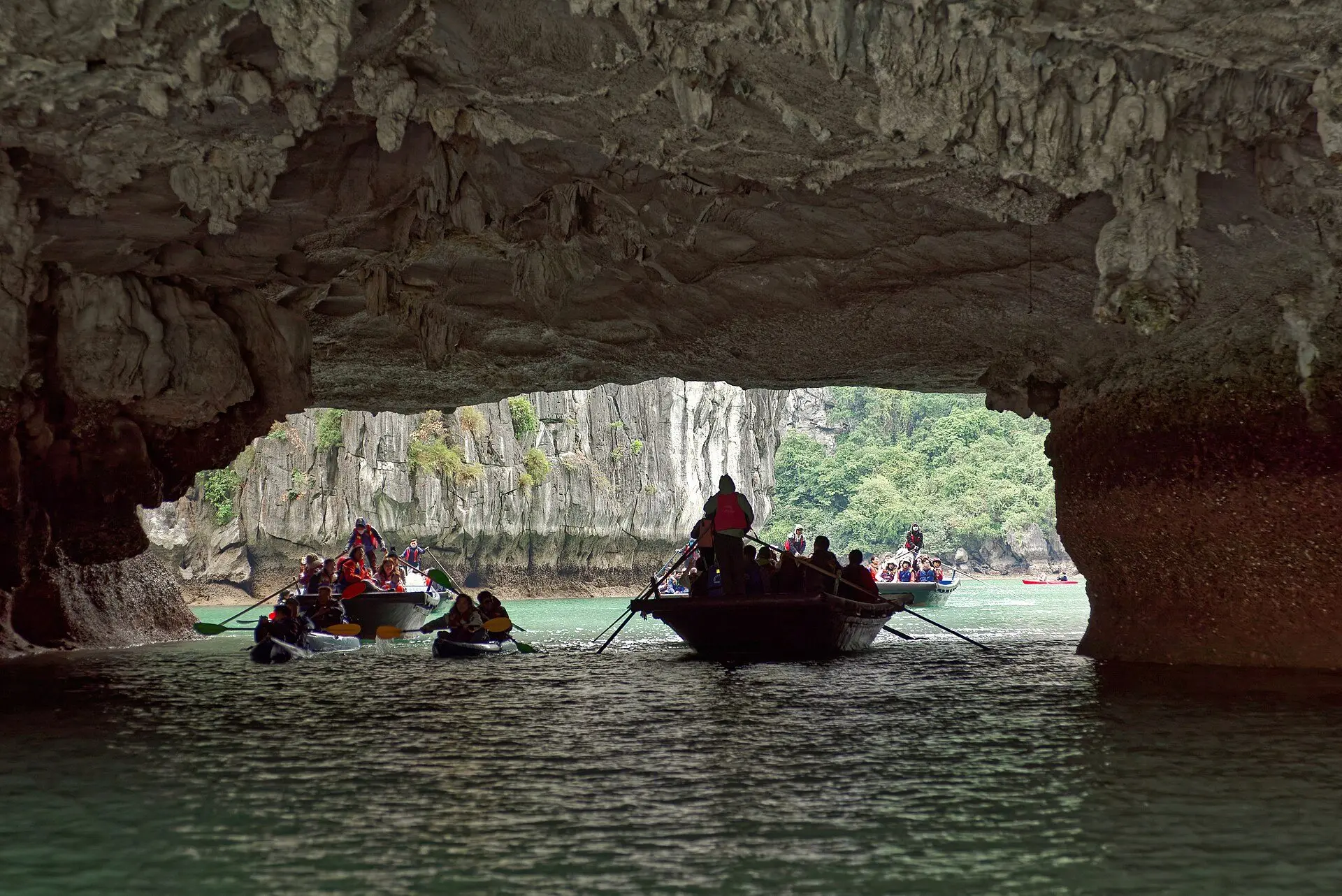
Only by boat. Route 1 leaves from Tuan Chau International Cruise Port or Ha Long International Cruise Port, and many day tours follow it. After landing on Dau Go Island, you climb the steps to the entrance and follow the walkway through the three chambers.
Not every Ha Long Bay trip stops at Dau Go. If the cave matters to you, check that the route or tour you book lists it by name.
How long does a visit take?
Allow about 30–60 minutes, including the climb, the walk through the chambers and the way back down to the landing. If your trip also includes Thien Cung Cave, allow extra time for the second cave and the short walk between them.
Is Dau Go Cave difficult to visit?
The main effort is the climb: about 90 steep stone steps from the landing to the entrance, followed by more stairs and changes in level inside. The route is not step-free and is not suitable for wheelchairs.
- Wear shoes with good grip.
- Bring water for the climb, especially in the hot months.
- Take damp steps and uneven ground slowly.
- Keep young children close on the stairs and near railings.
- Do not touch the formations or leave the marked path.
- If anyone in your group has trouble with stairs, ask the tour operator before booking.
Opening hours and the best time to visit
The Management Board lists Dau Go Cave’s visiting hours as 7:30 AM–5:30 PM from 16 April to 31 October and 7:30 AM–5:00 PM from 1 November to 15 April.
Spring and autumn are the most comfortable seasons for the climb. In summer the outdoor stairway is hot and humid, although the cave itself gives some relief from the sun. The steps and the landing get busy when several boats arrive together, and at weekends and on public holidays. Rain makes the outdoor steps slippery, and in severe weather the authorities can suspend sailings.
For month-by-month conditions, see our guide to the best time to visit Halong Bay.
Dau Go Cave tickets and entrance fees
Dau Go Cave is on Ha Long Bay sightseeing Route 1, together with Thien Cung Cave, Cho Da Islet, Ba Hang Cave, Dinh Huong Islet and Trong Mai (Cock and Hen) Islet. The Management Board lists the Route 1 day-visit fee as 250,000 VND per person. The boat is booked separately or comes as part of a tour.
If you are on an organised tour, check whether the route fee is included in your price. Fees and route arrangements can change, so confirm the current rate with the Management Board or your tour operator.
Dau Go Cave and Green Ruby Cruises
Dau Go Cave is not a stop on any Green Ruby itinerary. Green Ruby 1 is being prepared for overnight cruises in Ha Long Bay with planned visits to Sung Sot Cave, Ti Top Island and Luon Cave, on a different part of the bay.
If you would like to see Dau Go and Thien Cung as well, plan a Route 1 trip on a separate day: a cruise check-in at Tuan Chau leaves little room for a sightseeing trip beforehand.
Nearby attractions
Thien Cung Cave
About 300 metres away on the same island, Thien Cung, the Heavenly Palace, is known for its dense, brightly lit stalactites and stalagmites. Seeing both caves on one trip shows two quite different cave interiors.
Ba Hang Cave
Also on Route 1: three small caves close together that open onto two saltwater lakes, among islands covered in forest all year.
Trong Mai (Cock and Hen) Islet
Two rocks facing each other across the water, chosen as a symbol of Ha Long tourism. They are the last stop on Route 1.
Questions visitors ask
Where is Dau Go Cave?
On Dau Go Island in the western part of Ha Long Bay, Quang Ninh, about 3 km from Tuan Chau and 300 metres from Thien Cung Cave. You reach it by sightseeing boat.
How long does it take to visit Dau Go Cave?
Around 30–60 minutes, including the steps up to the entrance and the walk through the three chambers.
How many steps are there at Dau Go Cave?
About 90 steep stone steps lead from the boat landing to the entrance, and there are more stairs and changes in level inside.
How much is the Dau Go Cave entrance fee?
The cave is on sightseeing Route 1, for which the Ha Long Bay Management Board lists a day-visit fee of 250,000 VND per person; the same route includes Thien Cung Cave. The boat costs extra unless your tour includes it.
Is Dau Go Cave suitable for older travellers or children?
Many visitors manage it, but the steep stairway can be hard for anyone with limited mobility. Keep children close, and check the walking involved before booking if stairs are a problem.
Is Dau Go Cave the same as Thien Cung Cave?
No. They are two caves on the same island, about 300 metres apart, and both are on Route 1. Dau Go is known for its size and the daylight in its first chamber; Thien Cung for its dense, lit formations.
Is Dau Go Cave the same as Sung Sot Cave?
No. Dau Go is on Dau Go Island and on sightseeing Route 1; Sung Sot is on Bo Hon Island and on Route 2.
Can you visit Dau Go Cave without an overnight cruise?
Yes. Route 1 runs as a day trip from Tuan Chau or Ha Long International Cruise Port, so an overnight cruise is not needed.
Is Dau Go Cave included in Green Ruby itineraries?
No. Green Ruby 1’s planned Ha Long Bay itineraries visit Sung Sot Cave, Ti Top Island and Luon Cave instead. To see Dau Go, book a Route 1 sightseeing trip on another day.
Sources
- Ha Long Bay Management Board: Đầu Gỗ Cave (Vietnamese)
- Ha Long Bay Management Board: The Wonders of Ha Long Bay
- Ha Long Bay Management Board: visiting hours
- Ha Long Bay Management Board: sightseeing routes and entrance fees
- Quang Ninh Newspaper: Emperor Khai Dinh’s northern tour and the stele at Đầu Gỗ Cave (Vietnamese)
- Showcaves.com: Dau Go Cave
- UNESCO World Heritage Centre: Ha Long Bay – Cat Ba Archipelago
- Photo: Dau Go cave, Mustang Joe (Wikimedia Commons)
Photo: Mustang Joe, CC0, via Wikimedia Commons
Information checked: